


We use the word insight without thinking about it.
But notice what insight actually is. It isn’t just understanding something. It’s the moment several things you knew separately suddenly resolve into a new thing you now know. The penny dropping. The pattern emerging. I see what you mean. No, you don’t. You just connected some things you’d been carrying separately and synthesised some new knowledge.
Here’s something that’s been niggling lately… there’s no equivalent word for that same event when it arrives through your ears.
You’d think there’d be four more, one per sense? Arguably more than half the human experience is auditory. We were telling stories around fires for tens of thousands of years before anyone scratched the first letter onto the cave wall. The voice carries information the transcript can’t... hesitation, warmth, the catch before someone says the thing they didn’t want to say, the half-second of silence that means I am about to share deeply with you. Most of that does not survive the transcription trip into text.
And yet there’s no English word for the connections we make from listening.
So I’d like to propose one: insound.
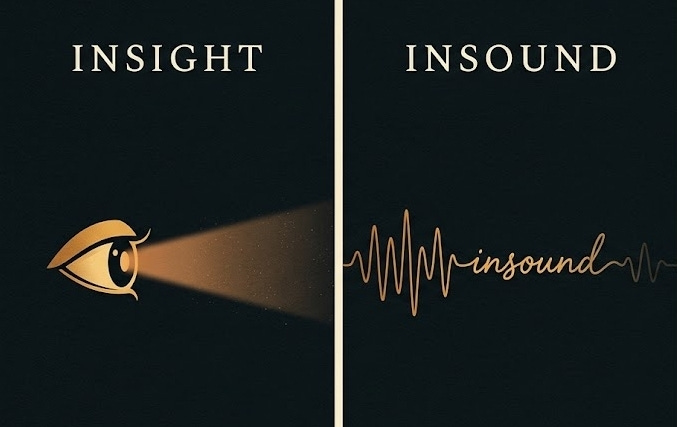
insound (n.) — a connection made through listening; the moment when tone, pause, breath, or inflection reveals something the words alone didn’t say.
“Halfway through the interview, the insound landed: he wasn’t proud of the deal, he was relieved it was over.”
It’s the moment the guest’s careful answer connects with the nervous breath underneath it, and you realise the answer was rehearsed. It’s the warmth in someone’s voice when they talk about a colleague, set against the cool professionalism of the rest of the conversation, telling you who actually runs the team. It’s the catch in a CEO’s voice when she describes the company’s near-death moment three years ago, still not fully metabolised. It’s the absent enthusiasm in a brand spokesperson reading his own marketing copy, which tells you he doesn’t believe a word of it.
These aren’t content. They’re connections. They’re what your ear delivers that your eye never could.
The linguists have a name for this idea (the Sapir-Whorf hypothesis, which argues that language shapes what we notice). I’d put it more bluntly:
the thing we don’t have a word for tends to be the thing we underrate.
Which is possibly why audio gets undervalued by people who aren’t integrating it. They don’t have a word for the bit that does the work. :-)
Next time you listen to an interview, or a podcast, or a voice note from someone you know well, pay attention to what’s connecting underneath the words. The bit where you know how they’re feeling before they tell you. The bit where you trust them, or don’t. The bit where the pause…
…did more work than the answer.
That’s the insound.
Podcasts can deliver insights and insounds. Transcripts can only deliver one.
What insounds have you been missing?
Let’s have an adventure.

Solid Gold Podcasts & Audiobooks creates audio to help you #BeHeard, and apparently we make up words for it too.